

Many organizations show that most of the product damage during transportation is attributed to improper packaging. Imagine that you have a business that sells fragile glass items. Even though you’ve put a fragile sticker on top of it, your customers are receiving it in broken pieces.
So you decide to solve this. Mostly, you can’t control the transportation situations because of vibrations or poor handling. So you decide to wrap your items in stretch films. This can protect your products in harsh situations and make sure that they reach your customers in one-piece.
Stretch film rolls are not just magical for businesses, but are also a game changer when it comes to moving homes or offices. So whether you have to pack personal belongings or are in the business of shipping or storing goods, you need to use stretch films.
To get the most out of this decision, we have compiled seven must-know tips to help you maximize efficiency and ensure your products or belongings stay safe and sound.
1. Choose the Right Stretch Film

Selecting the perfect stretch film can feel like finding the right superhero cape – it needs to be strong, flexible, and perfectly suited to the task at hand. You have to continuously repeat the goal in mind, which is:
- Keep the product safe and make customer happy (if you want to use stretch film rolls for industry use)
- Keep the belongings safe while moving (for family use).
No matter which group you belong to, this section will guide you through the intricacies of stretch film selection.
Types of Stretch Film
There are primarily two main categories of stretch films: hand stretch film rolls and machine stretch film rolls. Within these categories, there are further classifications based on the manufacturing process: cast hand stretch film rolls/case machine stretch film rolls and blown.
- Hand stretch wrap is designed to be applied manually. It works well for small to medium sized operations. There is no need for fancy gadgets or machines to apply it so it is ideal for businesses or households that have to pack a few items.
- Machine stretch film is the go-to when you need speed and consistency. Imagine a high speed robot wrapping your products perfectly every time. That’s machine stretch wrap. It is fast, uniform, and a huge time saver for high volume operations.
Both of these have further categories based on the method of manufacturing:
- Cast stretch film is a category of both: machine and manual hand stretch rolls. This is produced by flattening molten plastics onto a chilled roll. So what’s the benefit? Well, cast film is known for its clarity, noise reduction during unwrapping, and good puncture resistance. So it is often used in applications that require product visibility.
- On the other hand, blown stretch film is created by inflating a plastic tube and then flattening it. The heavy duty stretch film is generally more elastic and are ideal for securing unstable or heavy loads.
Also, there are pre-stretched films that give you a head start. It’s already stretched to its limits which makes your job easier and faster. They are a favorite among workers as they also cover more area with less material and maintain a steady grip.
Factors to Consider When Choosing the Right Stretch Film
So now you know about the kinds of stretchable plastic films that are available in the market. But how do you choose the one that suits you the best? To make this decision, you have to consider these factors:
- Load Size/Weight: Heavier and larger loads require thicker, stronger films to ensure stability and protection. So machine stretch films with more thickness are recommended. Whereas, manual hand stretch film rolls are suitable for smaller, lighter loads.
- Storage Conditions: Factors such as temperature, humidity, and exposure to sunlight can affect firm performance. For cold storage or environments with changing temperatures, choose stretchable plastic films that are designed to maintain their properties under such conditions. High humidity can weaken some films so consider buying films with moisture resistant properties. We’ve talked about storage conditions in detail in tip number four.
- Load Type/Shape: Have irregularly shaped or sharp-edged loads require films with higher puncture resistance and flexibility.
- Wrapping Equipment: Hand stretch wrap is suitable for manual wrapping machines. But you should opt for machine stretch films that are compatible with your equipment to maximize efficiency.
If you are still confused, let us break it down for you!
Choose hand stretch wrap or thin machine stretch rolls in this case:
- You have few items to wrap,
- Storage conditions are not harsh,
- Object’s shape is simple.
But choose thick machine stretch instead of hand stretch rolls if:
- You have many items to wrap,
- Storage conditions are harsh,
- Shape of the object is irregular or has sharp edges.
2. Understand Specifications

You know the types of stretch films but what about its specifications? Specifications like gauge, width, length, and elongation determine the film’s performance. So tip number 2 is to learn about these features.
Let us break down some of these specifications to help you make an informed decision.
Gauge
Gauge of a stretch film is its thickness that is usually measured in mils – thousandths of an inch. So stretch film rolls with less gauge means they are less thick. This makes them suitable for:
- Lightweight loads,
- Less demanding applications.
These are cost effective and material usage. However, the downside of using thin gauge is that they lack the strength needed to wrap and handle heavier or irregular loads. However, there is a solution.
If you require heavy-duty wrapping then go for heavy gauge stretch film rolls. These are stretch wrap film heavy duty. These offer superior strength and puncture resistance. But what if you want something balanced? Something that has properties of both thin and thick stretch films?
If that’s the case with you, go for medium gauge films that are neither too thick nor too thin. This makes them ideal for most general purpose applications. By using these, you will have a peace of mind because of its good balance of strength, flexibility, and cost.
Width
Let’s start with narrow widths. As you might have guessed, these are used for bundling smaller items or wrapping products with irregular shapes. And these are also perfect if you don’t have a stretch film dispenser.
Standard widths are most common for general pallet wrapping. These size sizes provide adequate coverage and efficiency for most wrapping needs.
Lastly, wide machine stretch film rolls are used in machine applications for covering larger surface areas quickly. Wide machine stretch film rolls reduce the number of wraps needed, enhancing efficiency.
3. Compliance with Industry Standards

Adhering to industry regulations and standards is paramount for businesses involved in packaging and shipping. Non-compliance can lead to hefty fines, product recalls, and damage to your company’s reputation. So our tip number three is to stay in touch with industry regulations and standards.
Since every business has a different nature, hence, they have to face different regulations and standards. To save your time, we have provided some relevant hand stretch film information for different industries:
- Food Safety: Industries handling food products must comply with regulations like the Food Safety Modernization Act (FSMA) in the United States and equivalent standards in other countries. These regulations dictate the types of materials that can come into contact with food, including packaging materials.
- Transportation: The Department of Transportation (DOT) in the United States and similar agencies in other countries have regulations governing the packaging and transportation of hazardous materials. These regulations often specify packaging requirements, including the use of appropriate stretch wrap roll.
- Consumer Product Safety: The Consumer Product Safety Commission (CPSC) in the United States and similar agencies enforce safety standards for consumer products.
But how to Choose Stretch Films That Meets Compliance Requirements
First of all, verify that the stretch film is made from materials approved for contact with your products. For example, food-grade stretch film should be free of harmful chemicals and additives.
You can contact your supplier to get this information. Or look for certifications on their website that indicate compliance with specific standards, such as the Food Contact Substance (FCS) certification for food-grade films.
Or request documentation from your stretch film supplier that confirms the product’s compliance with applicable regulations. This can include material safety data sheets (MSDS), certificates of analysis, and declarations of conformity.
But if your product is critical and contact with harmful stretch film can cause problems, then conduct independent tests to verify its compliance with your specific requirements.
Homestraw, for example, is a dedicated supplier of industrial strength stretch wrap roll. We provide products that meet the highest quality and compliance standards. We understand the importance of protecting your products and your business, and we are committed to exceeding your expectations.
4. Proper Film Storage

Earlier we covered tips that could save your time and money when buying the plastic stretch film wrap, but what to do when you’ve already purchased them? Well, you have to properly store them until they are ready to use.
So tip number four is to store stretch film roll in proper conditions as they are sensitive to the environment. To ensure optimal performance, store it in the following conditions:
- Temperature: Consistent temperatures between 50°F and 80°F (10°C and 27°C) are ideal. Extreme heat can cause the film to become brittle and lose its elasticity, while freezing temperatures can make it stiff and difficult to unroll.
- Humidity: Maintain a relatively low humidity level in the storage area. High humidity can lead to condensation on the film, promoting the growth of mold and mildew.
- Light: Protect the film from direct sunlight and artificial light. Exposure to light can degrade the film’s properties over time.
But Why Bother Storing it Properly When You Could Just Put Them in the Store Room?
Well, the choice is yours but if you neglect proper storage conditions, you might have to face detrimental effects.
For example, exposure to extreme temperatures or humidity can cause the film to become stiff or brittle. On the other hand, excessive cold or humidity can lead to cracks or tears. Storing improperly can also cause contaminations of mold or mildew. So whether you want your stretch films to become unusable or not, the choice is yours. But we do recommend storing them in proper conditions.
So How Exactly Should You Store it?
Create a dedicated storage area for your cling stretch wrap film that’s certainly away from heat sources, direct sunlight, and moisture. You can also store the film on pallets to elevate it off the ground and prevent moisture build up.
To prevent it from dust, cover the stored film with a breathable material. And don’t forget to regularly inspect for signs of deterioration or damage. Dispose of any damage rolls ASAP.
5. Proper Wrapping Techniques
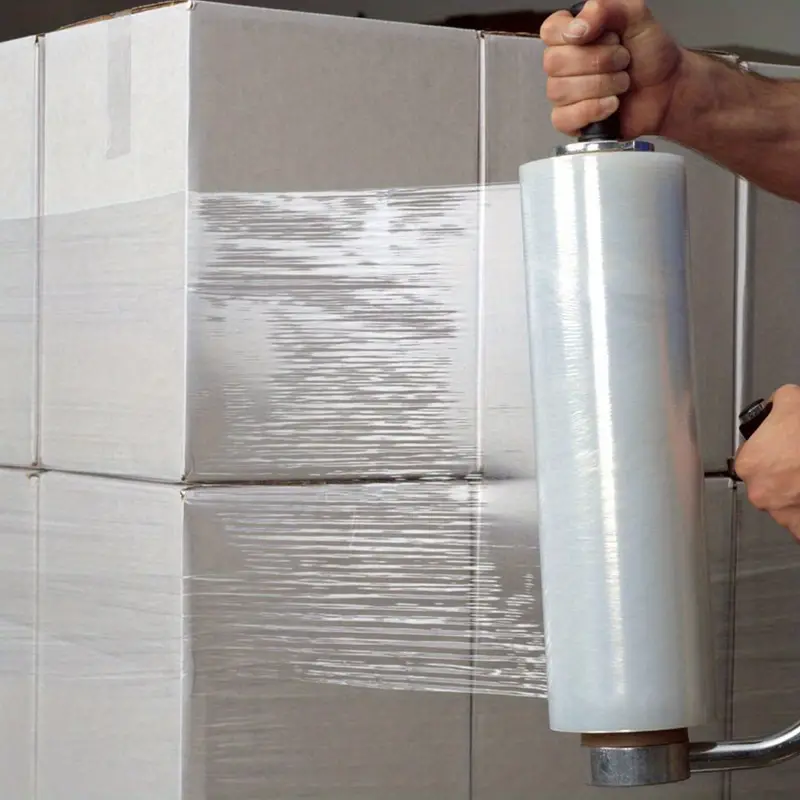
Tip number 5 is to learn proper wrapping techniques and forget about the typical roll-the-sheet-till-you’ve-covered-every-section method. For example, we are mentioning some tips here:
Before starting the wrapping process
Follow these tips before starting the wrapping process:
- Ensure that both the pallet and product are prepared for wrapping.
- Make sure the pallet is in good condition, free from damage or splinters.
- Ensure that it is leveled and stable.
- Next, place the product on the pallet and make sure that it is evenly distributed and centered.
- Stack items neatly to avoid uneven weight distribution.
Begin Wrapping
Begin wrapping at the base of the pallet, anchoring the film by attaching it to the pallet or the bottom layer of products. Secure the starting point with a few tight wraps to ensure it stays in place.
Continue wrapping in an upward spiral motion. Overlap each wrap by approximately 50% to ensure complete coverage and stability. This overlap is crucial for preventing gaps that could lead to load shifting or damage.
Apply consistent tension while wrapping. This helps keep the film tight and secure around the load. Avoid excessive stretching, as it can lead to film breakage, or too little tension, which can result in inadequate load stabilization.
Finish the Wrap
Once you reach the top of the pallet, secure the end of the film by wrapping it tightly around the top layers. If necessary, make a few additional turns to ensure the film adheres well and does not come loose.
Cut the film using a sharp blade or film cutter, and press the end of the film against the wrapped load to ensure it sticks. Some films have adhesive properties that help the end adhere securely, while others may require additional sealing.
There you have it! A wrapped pallet or a product. But we are not done yet.
Inspect the Wrapped Load
Inspect the wrapped pallet to ensure that the film is tightly secured and that the load is stable. Look for any loose areas or gaps that could affect the load’s stability. Lastly, make sure that the entire object or packing pallet is covered with no exposed areas.
PRO TIP: Consider investing in stretch wrapping equipment to make the task simple and automated.
6. Safety Considerations

So you considered the safety and storage of stretch film rolls, you also understood tips to choose the best stretch film rolls, and you also understood how to wrap materials using them. But what about the workers or yourself who has to wrap it around the product?
That’s where our tip number six comes in handy. Consider the safety considerations to protect workers and to ensure a smooth, injury free process. Below, we have provided some safety tips for using stretch film rolls and stretch wrap machines.
Use Proper Personal Protective Equipment
- Wear gloves to protect your hands from potential cuts or abrasion when handling stretch film rolls. This is especially important if the product has sharp edges or is heavy duty stretch film.
- Protect your eyes from debris or particles that might be released when cutting the film.
- Use appropriate footwear to protect your feet from dropped rolls or other potential hazards.
Handle Rolls with Care
- Use proper lifting techniques to avoid back strain or injury. Bend your knees, keep your back straight, and lift with your legs, not your back. If the rolls are too heavy, use lifting aids or ask for assistance.
- Do not attempt to lift or move rolls that are too heavy for you. Use equipment such as pallet jacks or forklifts to handle large rolls or multiple rolls at once.
Keep the Word Area Clean
- Ensure that the area where you’re wrapping or storing stretch film is free from obstacles that could cause tripping or accidents.
- Any spills or debris should be cleaned up immediately to prevent slips and falls.
Take Regular Breaks
- Take regular breaks to prevent fatigue and reduce the risk of repetitive strain injuries. Stretching exercises during breaks can also help alleviate muscle tension and improve circulation.
- If possible, alternate tasks to avoid repetitive movements and reduce the risk of overuse injuries.
Use Ergonomic Tools
- Use ergonomic stretch film dispensers with padded handles or adjustable grips to reduce hand strain. These tools can make the wrapping process more comfortable and efficient.
- Use wrapping aids such as film trolleys or roll holders to reduce manual handling and improve wrapping efficiency.
7. Partner with a Reliable Supplier

Choosing the right supplier for your bulk stretch film needs is a critical decision that can significantly impact your business operations. A reliable supplier provides not only high-quality products but also excellent customer service and competitive pricing.
Homestraw is committed to being your go-to partner for all your stretch film requirements. We offer:
- Superior Product Quality: Our stretch film is manufactured using advanced technology and high-quality raw materials, ensuring exceptional performance and durability.
- Unmatched Customer Service: Our dedicated team is committed to providing exceptional customer support, from order placement to product delivery and after-sales assistance.
- Customization Options: We understand that every business has unique needs. We offer customized speciality stretch film options to meet your specific requirements.
Contact Us Today
Ready to experience the difference a reliable stretch film supplier can make? Contact Homestraw today to discuss your packaging needs. Our experts will work closely with you to find the perfect stretch film solution for your business.
Our website: https://www.homestraw.com/
Contact Page: https://www.homestraw.com/contact-homestraw/
Email Address: info@homestraw.com
Contact Number: +86 13585089388
All Products: https://www.homestraw.com/product/
Conclusion
By carefully selecting the right stretch film, storing it properly, and mastering effective wrapping techniques, you can significantly enhance your packaging operations. Adhering to industry standards and partnering with a reliable supplier like Homestraw will further optimize your packaging process. Implementing these tips will not only protect your products but also streamline your operations and reduce costs.